Drowning:
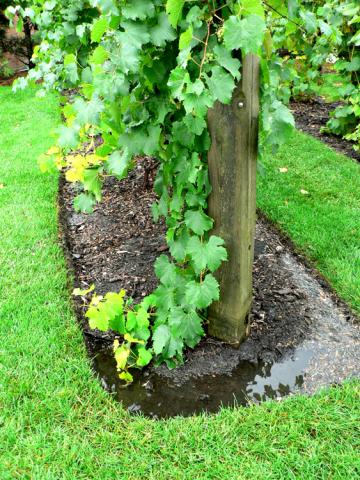
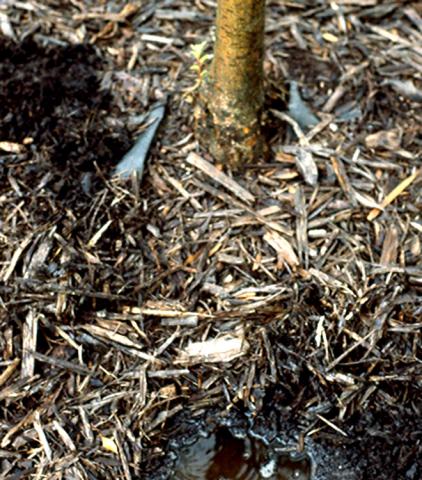
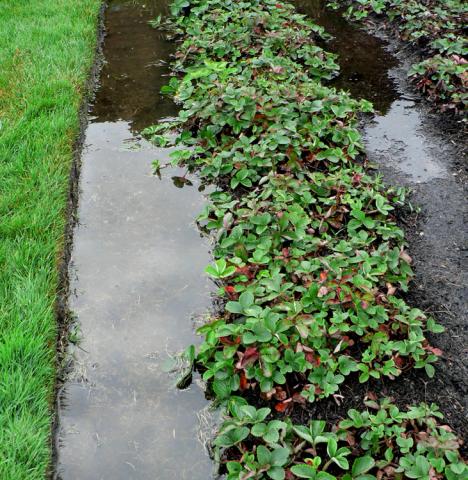
When soils remain saturated with too much water, the plant roots cannot function properly and drown. As the roots die, the bark on the root begins to rot. Continued drowning causes the inner tissue to turn brown (on most plants, the tissue right under the bark is creamy white) and die while the bark softens and separates from the inner tissue. Meanwhile, above ground, the leaves begin to wilt, and leaves start going off color. As more and more roots drown, the leaves turn brown and die and eventually the entire plant dies. While simple drowning can cause the death of a plant, the drowning cycle can be problematic in other ways. Many root rot organisms attack when soils are wet and roots are stressed. Once most of these organisms get into the root, the fungi or fungi-like organisms will infect and kill root cells as long as the soils stay too wet. Other pathogens (Verticillium or Fusarium wilt pathogens) attack stressed roots. Drowning roots are stressed roots.
Edema:
Some edema symptoms are bumps, or blisters on the lower leaf surface. Occasionally on some plants edema symptoms are seen on the upper leaf surface and/or on the petioles and stems. Eventually the bumps/blisters turn tan and corky when the cells rupture. The tan corky bumps are easily seen on lower epidermis of the needles of yews (Taxus spp.) when they develop edema. Depending on the plant other symptoms may be seen. Outside, many cool humid/damp/rainy days may result in edema occurring on several herbaceous plants as well as the yew and hibiscus. The following herbaceous flowers are prone to edema:begonia, ivy geraniums, cactus, cleome, ivy, ipomoea and annual thunbergia. Several vegetable plants such as broccoli, cabbage, cauliflower and tomato (leaves or fruit) are prone to edema.