Wood Rots and Decays

Pathogen Type
Scientific Name
Many genus and species involved
Frequency
4
Severity
4
Hosts
There are numerous fungi that cause wood rots. All the wood rot fungi are saprophytic,which means they only break down what is already dead.
Symptoms
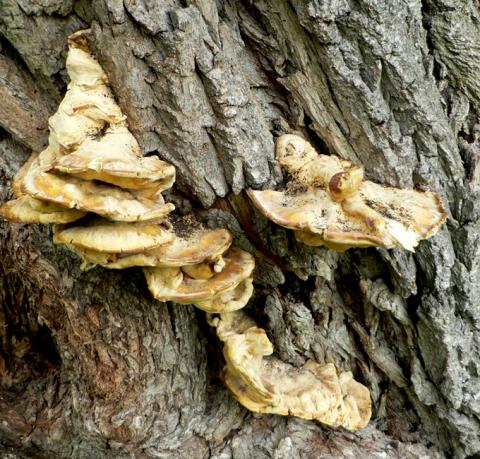
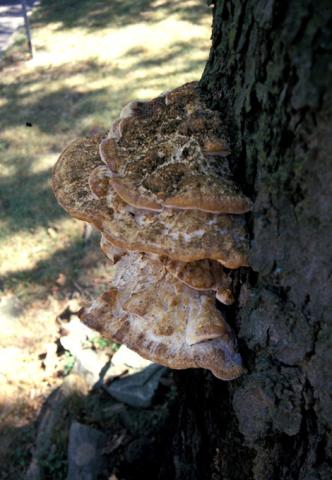
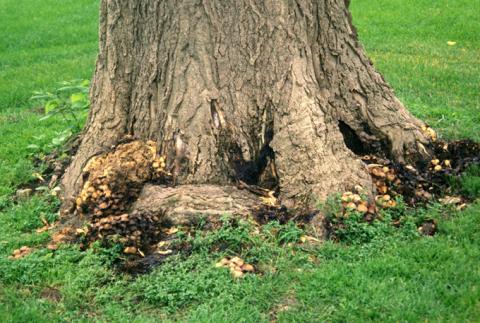
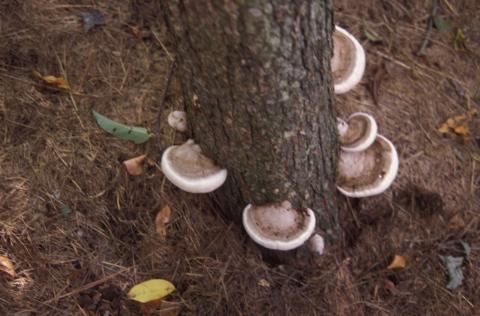
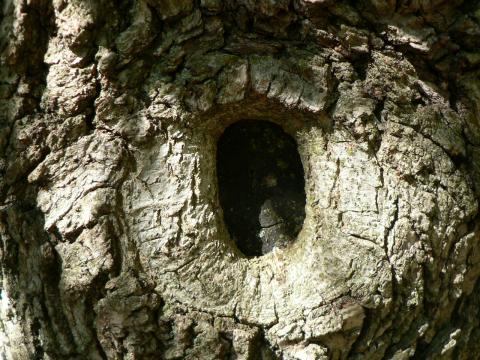
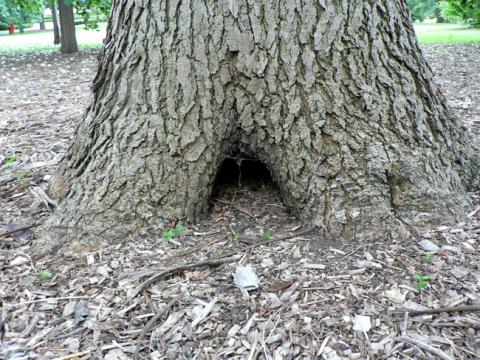
One group of wood rots are called shelf fungi since the reproductive structure sticks out like a shelf on a wall. The shelf fungi are divided into two groups. One group's fruiting structure is soft and can usually be quickly replaced if damaged or destroyed. The other group's reproductive structure is hard. They are conks and are sometimes called artistic fungi since writings/pictures can be drawn on the lower surface and these drawings last for years. The conks grow slowly and produce growth rings just like most trees. Some decay organisms make mushrooms/toadstools while some make puffballs. Some decay fungi make a "fuzzy-like" structure on the out side of the tree/wood. They may be in a variety of colors. Wood rots break down only dead woody material. Therefore, a tree may be rotting internally and still be able to maintain a full canopy of foliage since phloem, cambium, and sapwood are still active. Some trees show no external symptoms. Other trees may have openings and hollows in a branch or trunk which is another symptom of wood rot.
Cycle
Varies with the pathogen causing the decay.
Management

Rotting trees can be unsafe, especially when they overhang homes, other structures, as well as play areas. One must decide the risk level one is willing to take with his or her life and the lives of their loved ones. If the tree will not cause damage or loss of life when it falls, leave the tree standing. If damage or loss of life is a possibility, consider removing the tree as soon as possible.

Credit

James E. Schuster, retired Extension Specialist, Horticulture & Plant Pathology, University of Illinois
PathogenID
47
Images
Image
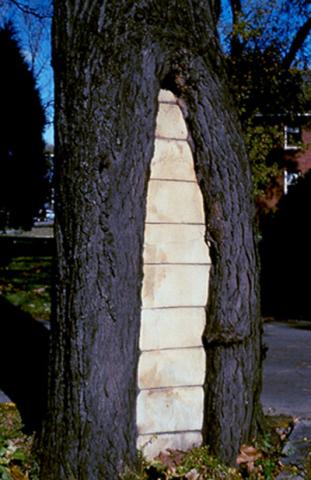
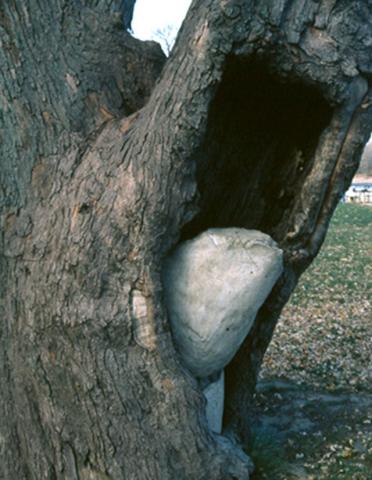
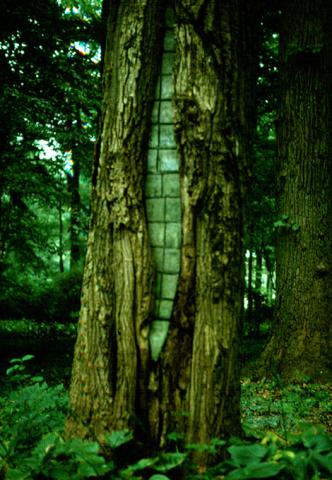
Rotted center of tree was filled with cement - NOT a recommended practice.
picID
31009
Image
Rotted center of tree was filled with cement - NOT a recommended practice.
picID
33884
Image
Rotted center of tree was filled with cement - NOT a recommended practice.
picID
31010
Image
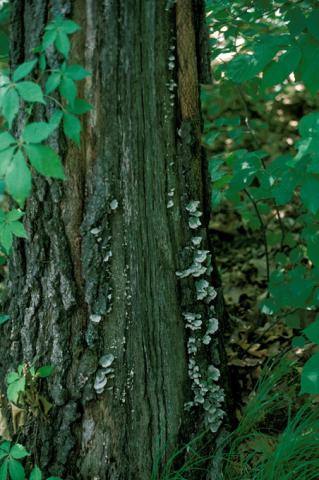
Wood rot fruiting bodies.
picID
33910
Image
picID
33911
Image
Wood rot shelf fungus fruiting body.
picID
33912
Image
Wood rot fruiting bodies around the base of a tree.
picID
33914
Image
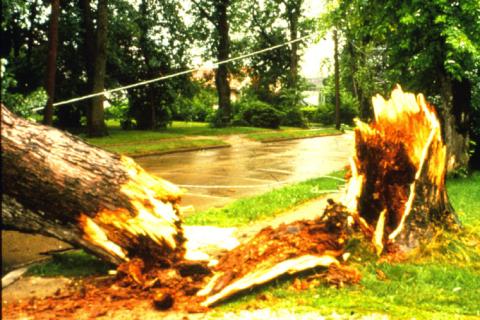
Wood rot fungi destroyed the structural integrity of this maple.
picID
33920
Image
Wood rot fruiting bodies.
picID
33302
Image
Wood rot shelf fungi on rotting tree.
picID
19709
Image
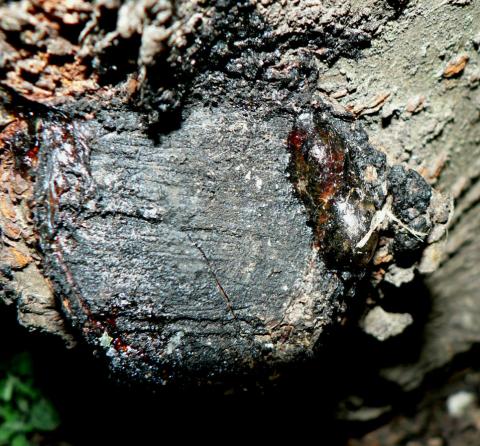
Tree tars and paints do NOT stop wood rots, most insects, or bleeding.
picID
25679
Image
Tree tars and paints do NOT stop wood rots, most insects, or bleeding.
picID
25683
Image
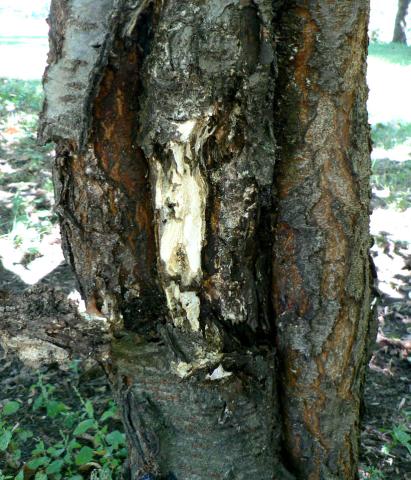
Wood rot fungi often enter through trunk injuries. The callus tissue may roll in and mask the rotting process.
picID
25684
Image
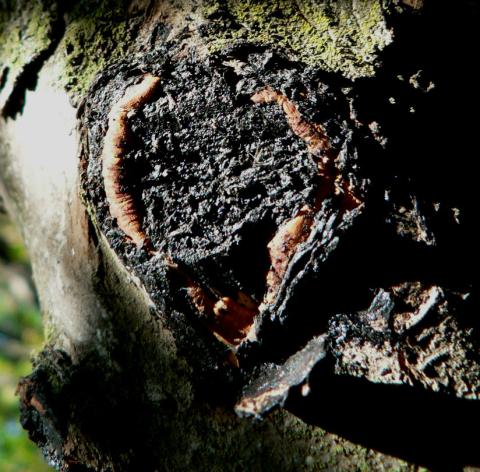
Wood rot fungi frequently enter through pruning cuts.
picID
25685
Image
Wood rot.
picID
34935
Image
Wood rot hole in tree flare.
picID
31107
Image
Wood rot fungi destroyed the structural integrity of this tree.
picID
25922
Image
Wood rot fungi feed on the wood that support trees. Hollowed-out trees are prone to breaking or falling over.
picID
25964
Image
Wood rot fruiting bodies.
picID
25974
Image
Wood rot shelf fungus (conks shelf fungi are woody and have yearly growth rings); sometimes called artistic fungi.
picID
25979
Image
Rotted center of tree was filled with cement - NOT a recommended practice.
picID
25983
Image
Wood rot fruiting bodies.
picID
25985
Image
Wood rot fruiting bodies on cut branch stub.
picID
26004