Anthracnose [Trees and Shrubs]

Pathogen Type
Scientific Name
Many genus and species involved
Frequency
3
Severity
2
Hosts
The trees and shrubs most commonly affected are ash, dogwood, maple, oak, and sycamore.
Symptoms

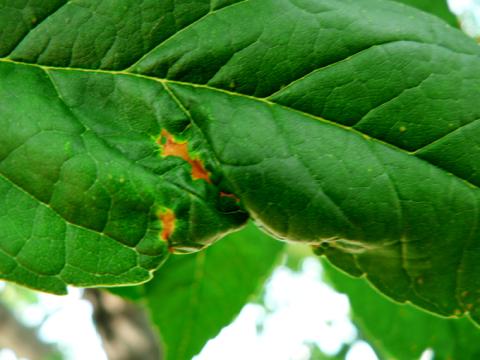
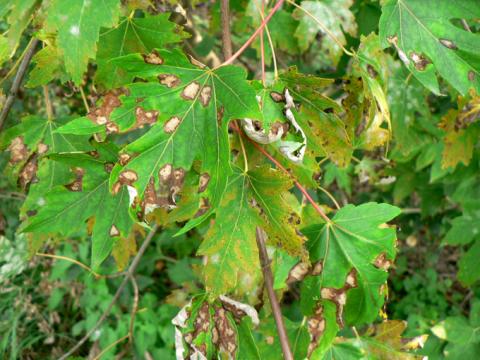
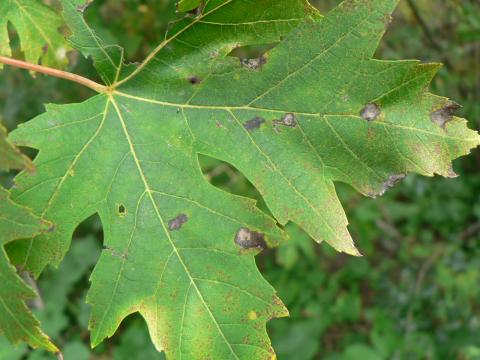
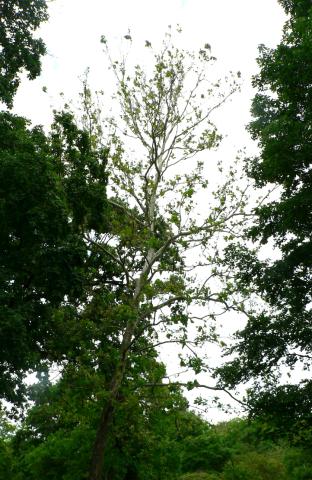
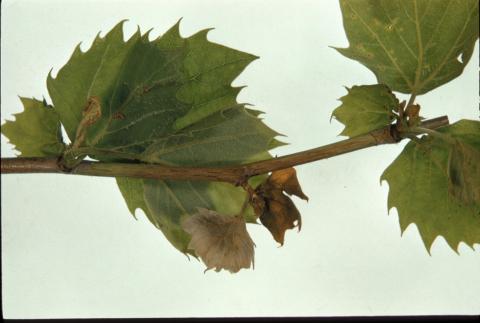
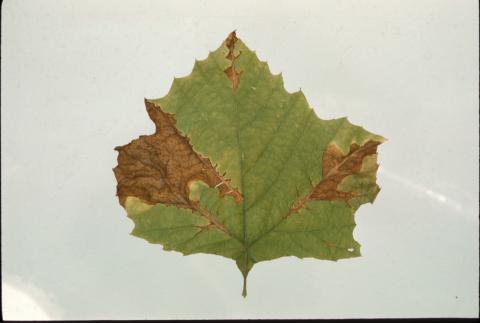
Spots or irregular necrotic areas appear on the leaves and twigs (sycamore, oak, dogwood) of infected trees in late spring and early summer. On some species, the necrosis follows along veins. In wet weather, the new growth becomes infected and may develop curled or distorted leaves. Symptoms can look similar to frost injury, which often occurs at the same time. On sycamore, anthracnose fungi also cause bud blight and branch cankers. Girdled stems die, producing a disfigured tree. In very wet years, premature defoliation is common.

Dogwood is affected by spot anthracnose (Elsinoe corni) as well as a much more serious disease called dogwood anthracnose (Discula sp.).

Cycle
Anthracnose fungi that infect only leaves overwinter on dead foliage on the ground. Cool, wet spring weather favors spore production and spread by wind and water to succulent new growth. Leaf lesions form, and spore production soon follows. Secondary cycles continue with cool, wet conditions. In a year with a cool, wet spring and early summer, infected trees often exhibit defoliation in June or early July. Anthracnose fungi that infect both stems and leaves overwinter in buds and bark and on cankers. Spores produced in the spring are splashed or blown to nearby leaves. The fungus can then grow into the petiole and eventually into the stem to form a stem canker. Secondary cycles of infection occur. Sycamore, oak, and dogwood have anthracnose diseases that infect leaves and stems.
Management
Anthracnose diseases that infect only leaves rarely cause tree death but may cause early defoliation. A healthy tree will recover and refoliate with little permanent damage, so management practices are targeted at promoting tree vigor. An exception to this occurs with dogwood anthracnose, where stem cankers can girdle trunks and kill trees. If this disease is confirmed on a dogwood tree, removal of all infected plant parts, as well as applications of fungicides, are necessary. On most species, the removal and destruction of fallen leaves and major stem cankers reduce the potential for infection, but with oak and sycamore the cankers are so small and numerous that pruning is not possible. Fungicides are available to prevent anthracnose but are rarely recommended (except with dogwood [Discula] anthracnose) because of the cost of treating mature trees and because the disease is seldom fatal. If fungicides are used, they must be applied at bud break and reapplied, once or twice, at 10-14 day intervals to protect susceptible expanding leaf tissue. For oak and sycamore anthracnose, the first application should be made just before bud break. For large, high-value sycamore trees, the use of preventive injection fungicides is also an option.
Credit

James E. Schuster and Bruce E. Paulsrud, University of Illinois Extension

PathogenID
5
Images
Image
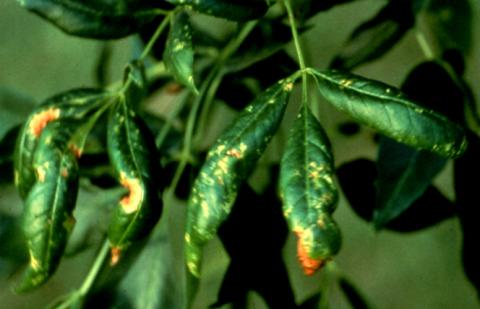
Anthracnose on ash leaflets
picID
34812
Image
Ash anthracnose.
picID
33252
Image
Anthracnose on silver maple.
picID
33841
Image
Anthracnose on maple.
picID
15504
Image
Anthracnose on silver maple.
picID
15505
Image
Sycamore anthracnose
picID
30925
Image
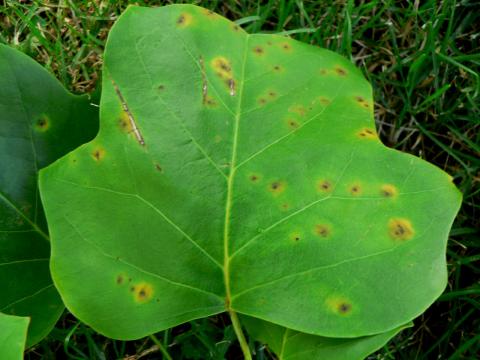
Anthracnose on tulip tree.
picID
15506
Image
Anthracnose (brown spots) and plant bug stippling (white spots) on ash tree leaflets
picID
30978
Image
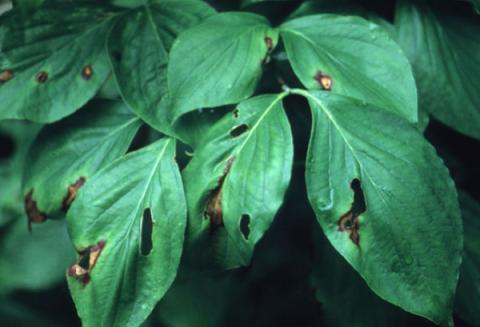
Spot (Elsinoe) anthracnose on flowering dogwood leaf.
picID
34891
Image
Oak anthracnose.
picID
34990
Image
Anthracnose on ash leaflets
picID
25941
Image
Veinal anthracnose on Norway maple leaf
picID
25989
Image
Sycamore anthracnose (twig blight due to canker).
picID
35275
Image
Sycamore anthracnose (shoot blight).
picID
35276
Image
Sycamore anthracnose damage.
picID
35278
Image
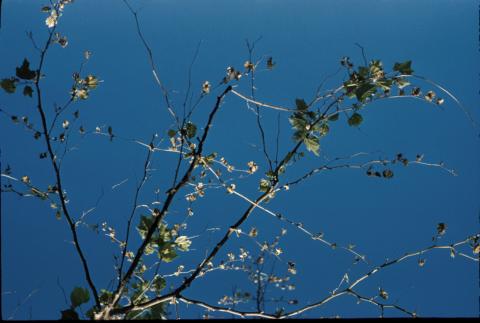
Sycamore anthracnose - effects of repeated twig blight.
picID
54002
Image
Sycamore anthracnose (shoot blight)
picID
54003
Image
Sycamore anthracnose (leaf blight)
picID
54004