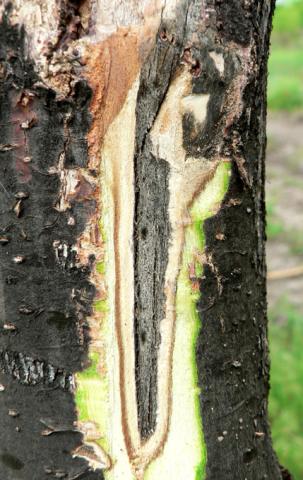
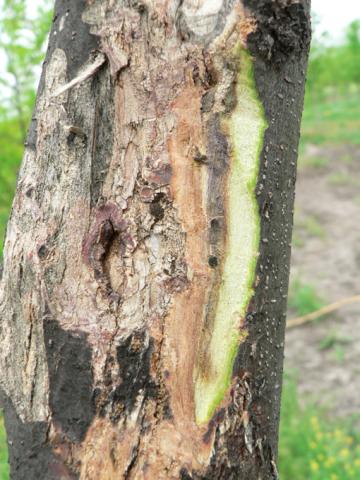
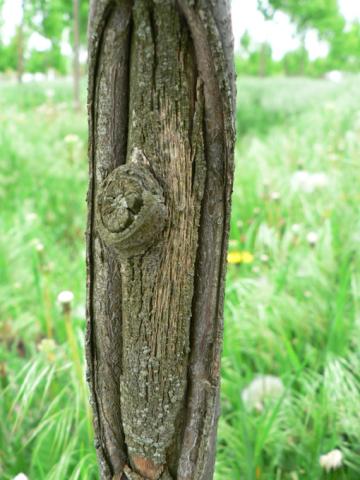
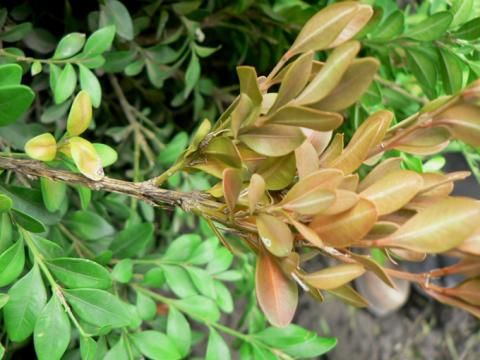
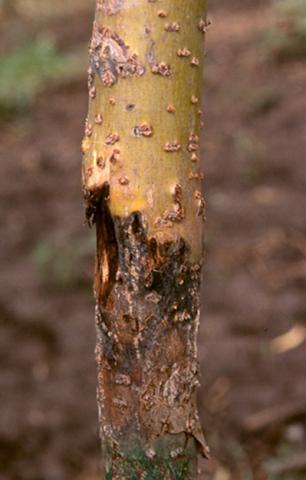
Canker fungi are opportunistic organisms that will invade and kill stressed plant tissue on many plants.
Symptoms
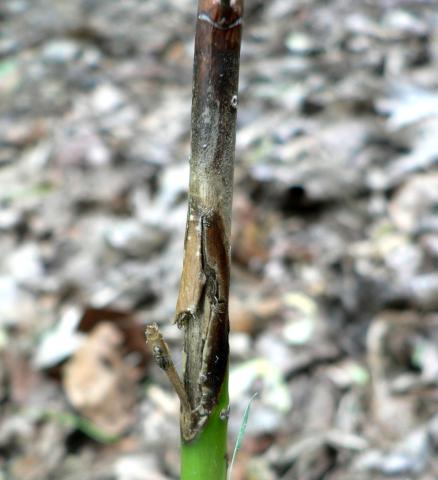
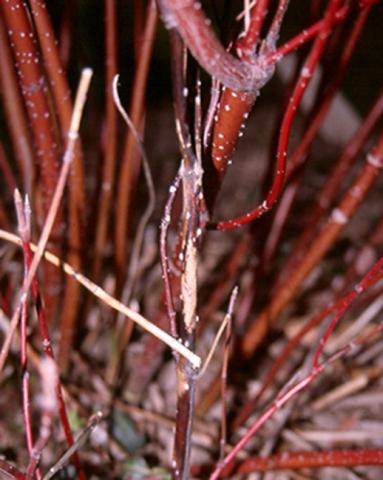
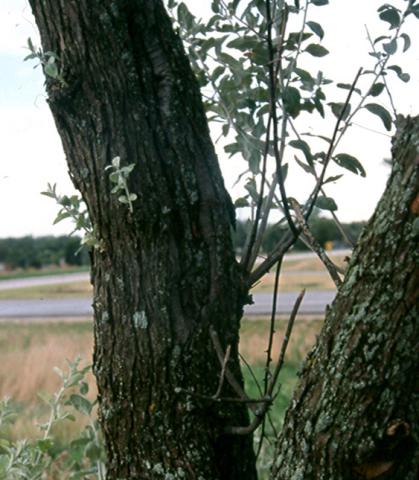
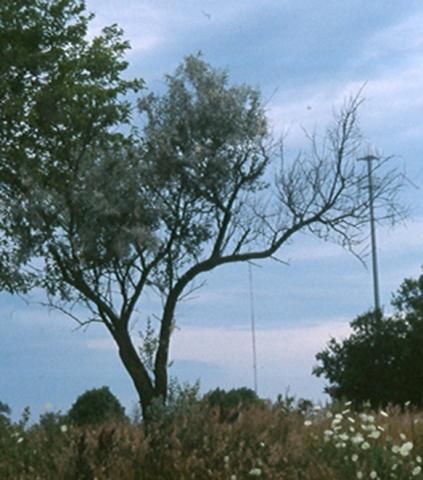
Under the right conditions, the canker fungi will kill the entire plant. Canker fungi often girdle the twigs and stems of plants. The foliage turns brown as it dries out. As the canker spreads, more and more of the plant is killed. Under the right growing conditions, the entire plant can be killed by the fungi. Environmental stresses, other diseases and insect injuries make plants more prone to canker diseases.
Cycle
In many cases, the fungi grow and cause dead areas on the woody tissue during the growing season, spore structures develop in the killed tissue. The spore structures vary in color and can often persist into the winter. Wet weather helps disperse the spores in these structures. The spores infect dead buds and other stressed or injured plant parts. The spores also infect through pruning wounds.
Management
Keep plants healthy by growing the plants in the right location and use good cultural practices in maintaining them.
Credit
James E. Schuster, retired Extension Specialist, Horticulture & Plant Pathology, University of Illinois