Oystershell Scale

Pathogen Type
Scientific Name
Lepidosaphes ulmi
Frequency
4
Severity
5
Hosts
Oystershell scale attacks a wide range of plants.
Symptoms
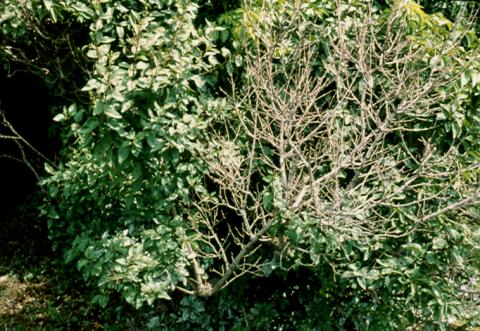
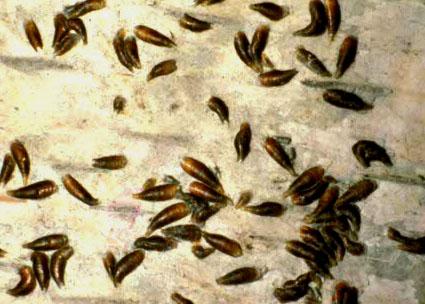
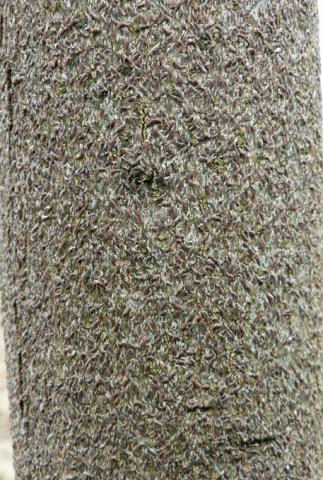
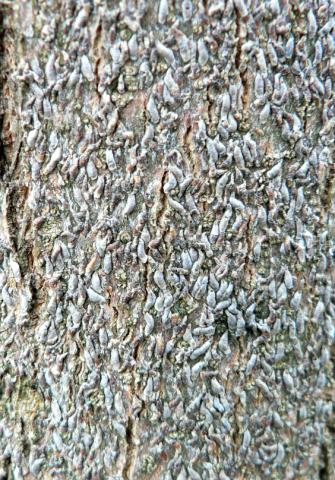
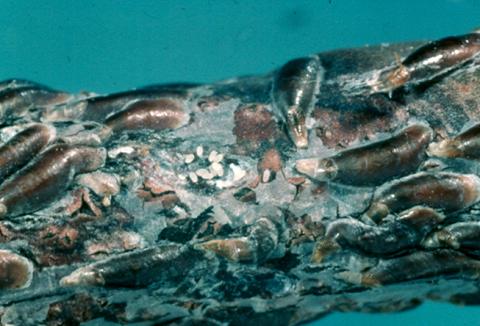
The scale got its name because it resembles an oyster shell. It is found in every state but it is found more often and in heavier numbers in the northern states. The scale often blends in with the color of the plant's bark. The scale is often "discovered' because branches are dying back from the feeding injury.
Cycle
Oystershell scale is an armored scale (its covering is a hardened waxy material). There are two commonly found races of oystershell scale in Illinois. They are brown oystershell scale and gray ostershell scale. The scale overwinters as eggs under the mother's covering. Crawlers of the brown race occur on dogwood when Vanhoutte spirea is in full bloom (about mid June in Northern Illinois). The crawlers of the gray race, which feeds on other hosts, emerge later.
Management
Crawler sprays of chemical insecticides timed to coincide with egg hatch are effective. This insect is not controlled with dormant oil applications. Pruning severely damaged areas will reduce infestations.
Credit

James E. Schuster, retired Extension Specialist, Horticulture & Plant Pathology and Dr. Philip L. Nixon, Extension Entomologist, Dept. of Crop Sciences, University of Illinois

PathogenID
101
Images
Image
Oystershell scale
picID
25893
Image
Oystershell scale
picID
31068
Image
Branches killed by oystershell scale
picID
31069
Image
picID
33980
Image
picID
34058
Image
picID
34059
Image
picID
26087