Hosts
Numerous plants and plant parts under four or more inches of snow.
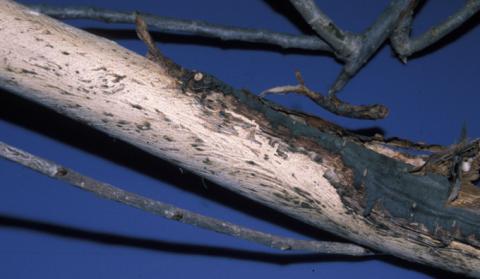
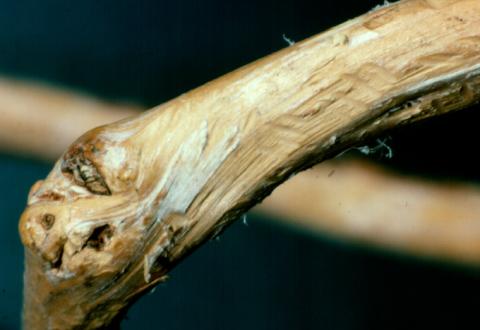
Voles can cause serious damage and even death of woody plants. Some field mice are voles. Voles have short tails while house mice and other micehave a relatively long tail. The coloring is similar, although voles are about half again bigger than house mice. Vole damage usually occurs during the winter. It often occurs in landscapes where there is a "natural or wild" area that touches the property line. Vole damage also occurs in landscapes that have naturalized areas, deep mulches,or large groupings of ornamental grasses or groundcovers. These give the voles a suitable habitat that allows them to breed and reduces predation on the voles. Voles eat the bark and cambium off of many plants during the winter when more suitable food supplies are limited. If the vole girdles the branch or trunk the plant above that location dies. Snow of three or more inches on the ground allows the vole to tunnel under the snow from the normal habitat to the junipers, arborvitae or other plants to feed on the bark and cambium.
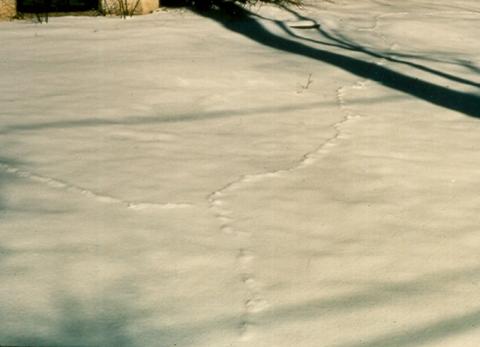
Voles will also feed on turf, particularly near protected areas as listed above. They feed on the roots, stems, and shoots of the grass, leaving meandering trails and runways about two inches wide. Occasionally, burrows 2-3 inches in diameter will be dug deeper into the soil.
Either use hardware cloth of 1/4 inch mesh or smaller around the desirable plants orremove the snow from around the base of the plants. Allow at least one foot or moreshoveled area all the way around the base of the tree's trunk.
Mulch should be only 2-3 inches deep to reduce their burrowing. Thin out spreading junipers and other groundcovers to reduce vole cover. Remove dead stems from ornamental grasses and perennials to reduce winter cover.
Damaged turf will repair itself rapidly in the spring. Overseeding will aid this recovery.
James E. Schuster, retired Extension Specialist, Horticulture & Plant Pathology and reviewed by Dr. Philip L. Nixon, Extension Entomologist, University of Illinois