Spruce Spider Mite

Pathogen Type
Scientific Name
Oligonychus ununguis
Frequency
3
Severity
4
Hosts
Spruce spider mite is not an insect. It has eight legs and is thus considered an insect-relative. It feeds on pine, spruce and many other needled evergreens.
Symptoms

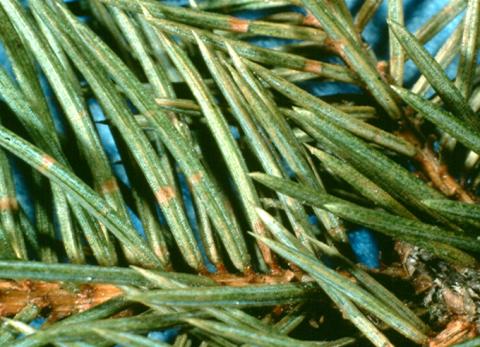
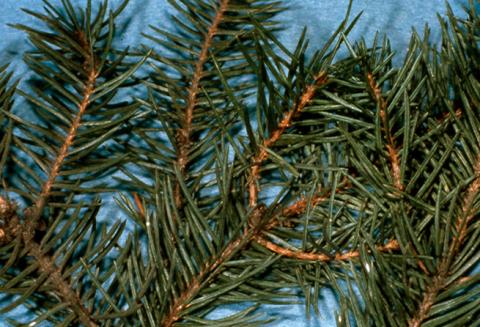
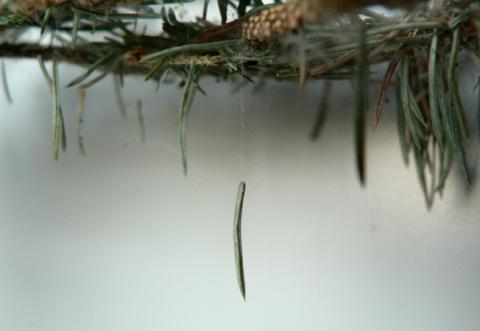
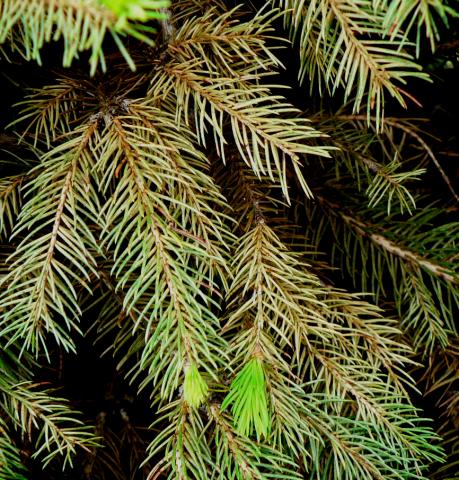
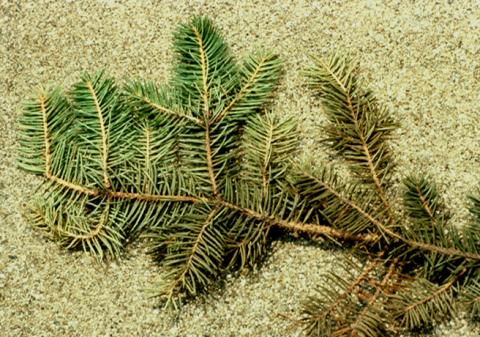
Thin silk strands may be found due to mite infestation. Stippling, tiny yellow to whitish spots due to feeding, may cause the needles to die and turn reddish brown when infestations are severe. Heavy infestations frequently cause the loss of entire branches or small trees.

Cycle
Spruce mites, feeding in the spring when temperatures are cool, tend to return in the fall in higher numbers. At first, young mites (larvae) have six legs but after one molt (nymphs) they have eight legs. The adult mites tend to be green, but can be brown. Spruce mites use the wind and their silk strands to disperse.
Management
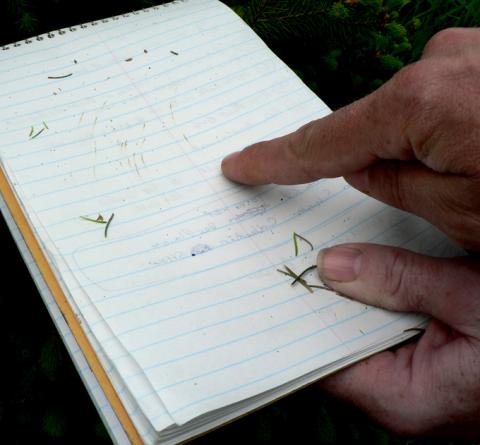
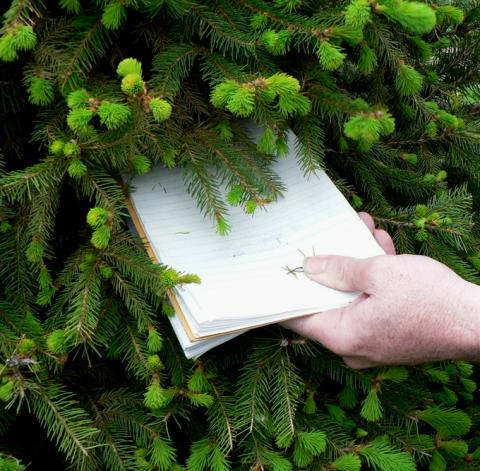
Reduce stress on trees. Use a sheet of white paper to check for mites starting when saucer magnolia is in pink bud to early bloom. Shake or rap the spruce branch above the paper. If tiny green to brown, slow moving, "dust particles" are seen, a miticide may need to be applied. Spruce mites leave a green streak or blotch when crushed. Some insecticides tend to increase a mite problem by killing off the predatory mites. Insecticidal soap, summer spray oil, and chemical miticides are effective.
Credit

James E. Schuster, retired Extension Specialist, Horticulture & Plant Pathology and Dr. Philip L. Nixon, Extension Entomologist, Dept. of Crop Sciences, University of Illinois

PathogenID
67
Images
Image
picID
33306
Image
Spruce spider mite damage to spruce
picID
31167
Image
Spruce spider mite stippling on spruce
picID
33357
Image
Spruce bud scale
picID
31181
Image
picID
33801
Image
Spruce needles hanging from spider mite silk strand
picID
31182
Image
Spruce spider mite damage
picID
32897
Image
Checking for mites
picID
32905