Sooty Mold

Pathogen Type
Scientific Name
Numerous genus and species
Frequency
3
Severity
3
Hosts
These fungi grow mostly on insect honeydew. Therefore they grow on any plant where enough honeydew accumulates. Often more than one fungus may intermingle on the same leaf.
Symptoms
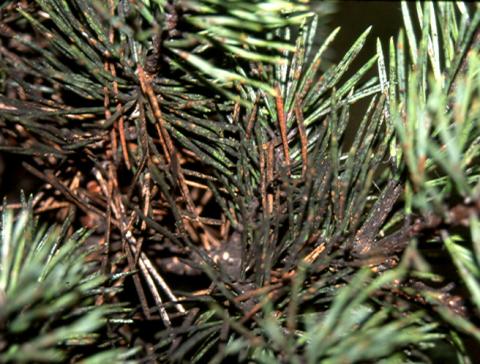
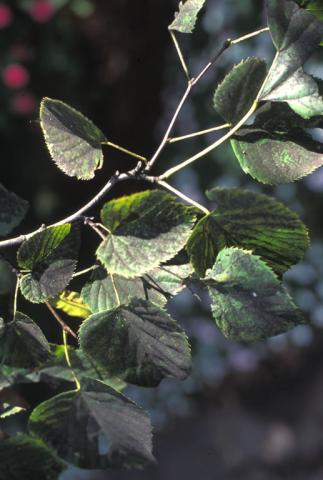
Sooty mold fungi have black mycelium and grow on insect honeydew. The honeydew is excreted by certain types of scales and aphids. The thickness and black intensity can vary with the individual fungus as well as multiple fungi growing together.
Cycle

As long as there is a sufficient amount of honey dew, sooty mold will grow - not only are plants affected but also cars, roofs, walls, patios and so on.

Management
Manage most sooty molds by reducing the insects which produce the honeydew.
Credit

James E. Schuster, retired Extension Specialist, Horticulture & Plant Pathologists, University of Illinois

PathogenID
41
Images
Image
Sooty mold on pine.
picID
25958
Image
Sooty mold growth on leaves.
picID
26092
Image
Tortise scale crawlers and sooty mold on pine.
picID
31186
Image
Sooty mold growth on leaves.
picID
19083