Rhizosphaera Needle Cast
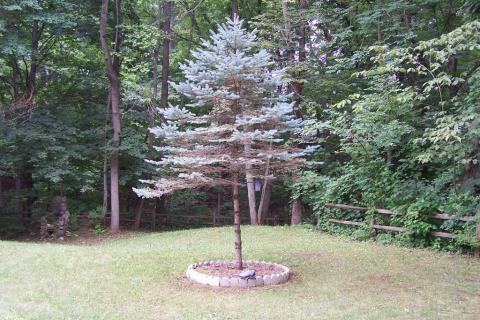
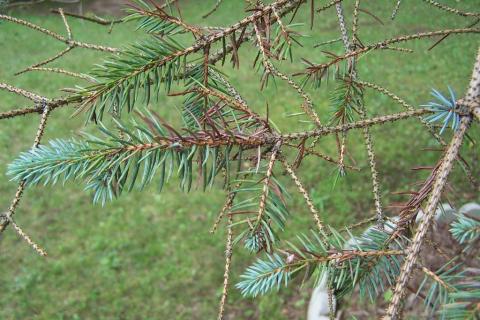
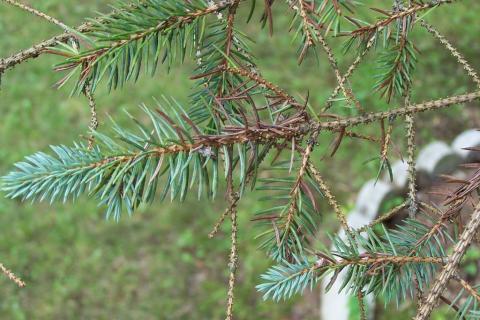
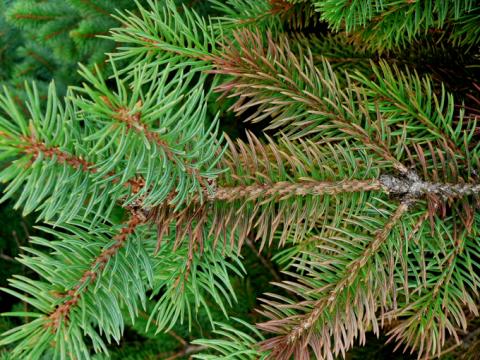
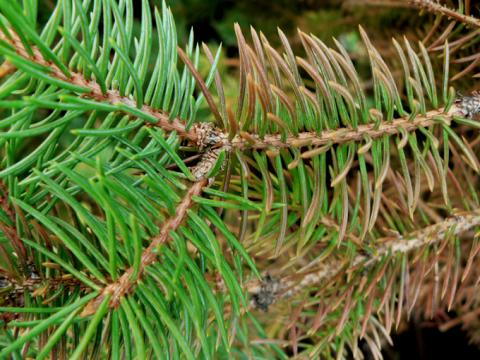
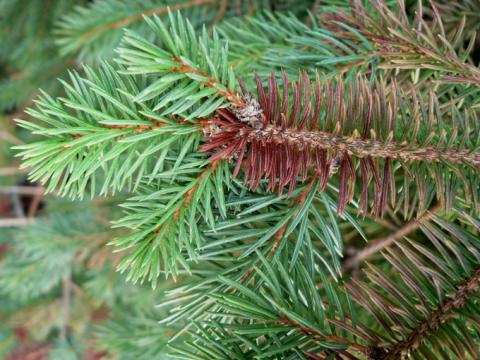
Infection occurs in the spring usually on lower branches and works upward around the tree. Sometimes the disease may start higher and then work downward. Any size tree may be attacked; however, trees over 20 years of age are more likely to be infected. Current year needles will appear healthy, even though they may be infected. These needles usually turn a mottled yellow by late summer. During the late winter and early spring, the needles turn brown (purplish brown on Colorado spruces) and fall off during the summer and fall.
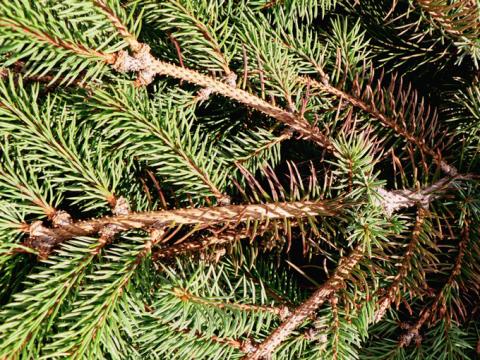
Look closely at the shapes of the Rhizosphaera and Stigmina fruiting bodies because they may look similar if you look too quickly. Stigmina makes the needles look dirtier than Rhizosphaera infected needles. Also, the Stigmina fruiting bodies look like "little spiders" while the Rhizosphaera fruiting bodies look like "smooth bowling balls" especially when seen especially under magnification.
James E. Schuster, retired Extension Specialist Horticulture and Plant Pathology, University of Illinois Extension