Potato Leafhopper [Woody Ornamentals]

Pathogen Type
Scientific Name
Empoasca fabae
Frequency
5
Severity
3
Hosts
Commonly found on red maple (Acer rubrum), wafer ash (Ptelea trifoliata), and burning bush (Euonymous alatus).
Symptoms
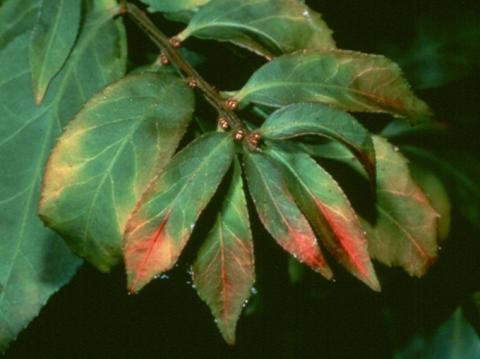
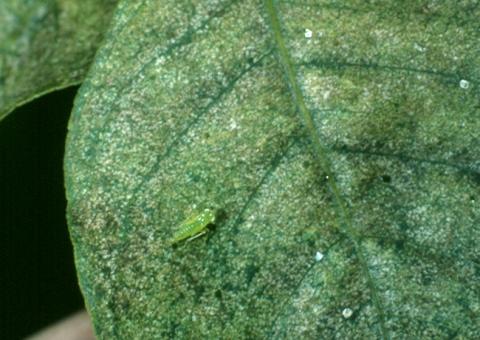
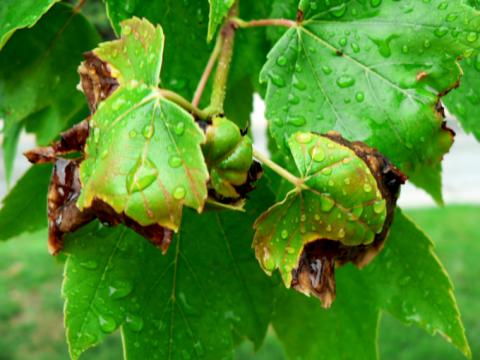
Potato Leafhopper feeds on foliage/shoots. This insect has a stylet (a tube-like mouth part) that it uses to pierce phloem-conducting tissue. The feeding causes cells to tear and break into pieces, whichcan clog the phloem tissue. In addition, the insect releases toxins as it feeds, causing additional injury to the plant. All this damage causes some cells especially along the leaf edges to die (hopperburn). Leaves will be mottled and have brown to black edges. It is common for early red fall color to appear. New leaves and shoots are stunted and deformed in severe cases. This does not cause serious damage to the health of the tree, but will reduce growth.
Cycle
The insect survives the winter in the Gulf States and is blown north in the spring. Once in Illinois, the insect will go through several generations in a growing season. Eggs are laid in cuts made along the veins on the bottom of leaves. Eggs are also laid in the leaf petiole.
Management
Treat with insecticide when leafhoppers are present, but before leaf curling occurs, to protect new growth.
Credit

James E. Schuster, retired Extension Specialist, Horticulture & Plant Pathology and Dr. Philip L. Nixon, Extension Entomologist, Dept. of Crop Sciences, University of Illinois

PathogenID
88
Images
Image
picID
33326
Image
picID
33328
Image
picID
33329
Image
picID
33331
Image
Potato lefhopper nymph and damage
picID
31102