Phomopsis Gall

Pathogen Type
Scientific Name
Phomopsis spp.
Frequency
2
Severity
3
Hosts
Phomopsis spp. causes forsythia and azaleas to develop abnormal growths or galls. (It can also be found on weeping figs growing inside buildings as house plants.)
Symptoms
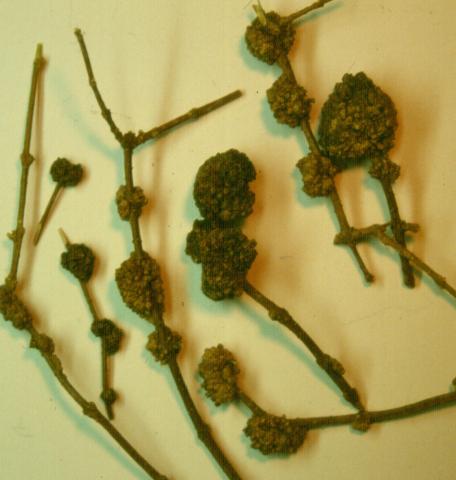
Galls can be as small as a pea to as big as an inch or more. The size of the gall varies with plant infected, the age of the plant tissue and where on the plant infection occurs. In general the galls are "round" and are found singly or in small clusters. On forsythia, the galls are often clustered.
Cycle
The fungus lives for several years in the galls before dying. Little is known about the life cycle of this pathogen.
Management
Prune out and destroy infected plant tissue.
Credit

James E. Schuster, retired Extension Specialist, Horticulture & Plant Pathology, University of Illinois

PathogenID
51
Images
Image
Phomopsis gall on forsythia.
picID
25853
Image
Phomopsis galls on forsythia.
picID
25515
Image
Phomopsis galls on forsythia.
picID
35102
Image
Phomopsis galls on forsythia.
picID
35103
Image
Phomopsis galls on forsythia.
picID
35104