Northern Pine Weevil

Pathogen Type
Scientific Name
Pissodes approximatus
Frequency
3
Severity
4
Hosts
The insects feed on pine and spruce as well as many other conifers.
Symptoms
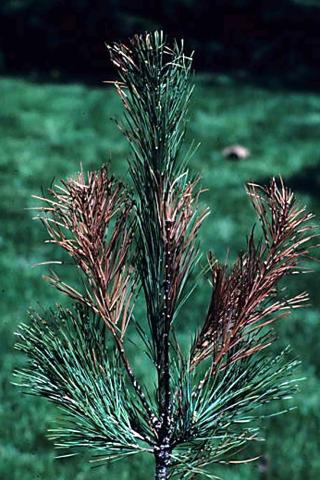
This insect seldom bothers landscapes since there is very little breeding material left around. The adult chews small holes in the bark of small twigs and branches. Bark may fall away in the chewed areas. On large trees the chewing is usually near the end of branches. Needles and shoots beyond the chewed area often die, leaving reddish dead tips, which is considered unsightly
Cycle
The adults feed at night and hide in the leaf litter during daylight. They over-winter as adults and emerge from late April to June depending on location. Adults may survive more than one "season" (fall through the following fall). It is not uncommon that they survive two "seasons. Adults lay their eggs under the bark of fresh cut stumps of pine trees. The larvae feed under the bark of the above ground stump portion and then pupate there, emerging in the fall.
Management
Grind out or otherwise remove the stumps of cut down conifers. If necessary use a recommended insecticide.
Credit

James E. Schuster, retired Extension Specialist, Horticulture & Plant Pathology and Dr. Philip L. Nixon, Extension Entomologist, Dept. of Crop Sciences, University of Illinois Entomologist

PathogenID
71
Images
Image
Northern pine weevil adult feeding damage on pine. P. Nixon
picID
38113
Image
Northern pine weevil damage. P. Nixon
picID
38114