Meadow Spittlebug

Pathogen Type
Scientific Name
Philaenus spumarius
Frequency
5
Severity
1
Hosts
Spittlebug will attack yarrow, roses, shasta daisies, columbine, mums, and numerous other herbaceous plants. It is also found on grasses and arborvitae and other woody plants.
Symptoms
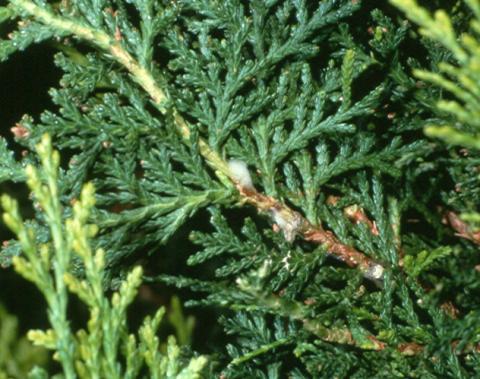
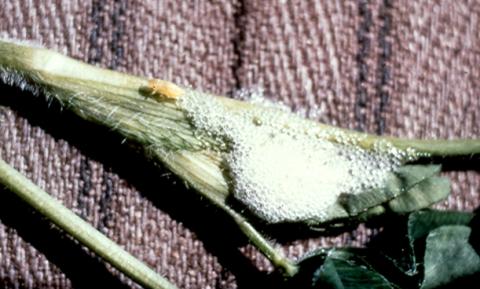
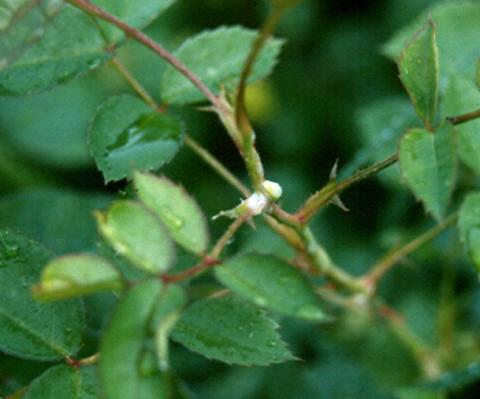
The immature insect produces a protective foam that looks like "spit." The foam helps protect the insect from ultraviolet light, predators, and insecticides.
Cycle
Adults over winter, laying eggs in the spring. Spittle-covered green nymphs become obvious on various plants during the spring. Later in the summer, the brown, leafhopper-like adults are common.
Management
Use a strong spray of water to wash the foam from the insect and knock it off of the plant. This will expose it to predators and those dislodged from the plant my die before they find their way back to the plant. Many chemical insecticides as well as insecticidal soaps are effective.
Credit

James E. Schuster, retired Extension Specialist, Horticulture & Plant Pathology and reviewed by Dr. Philip L. Nixon, Extension Entomologist, Dept. of Crop Sciences, University of Illinois
PathogenID
146
Images
Image
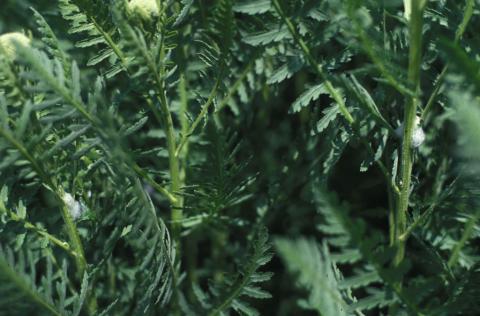
Spittlebug on yarrow
picID
19799
Image
picID
35197
Image
picID
35199
Image
picID
35256
Image
picID
35255
Image
Spittlebug on arborvitae
picID
33358
Image
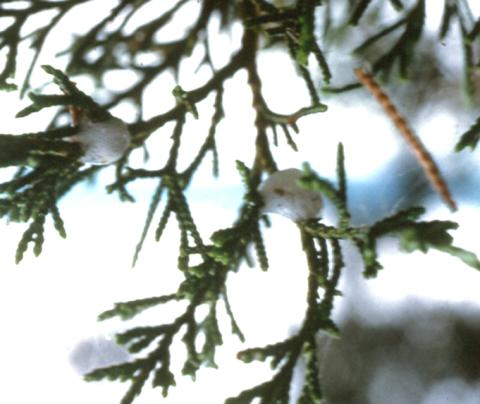
Spittlebug on juniper
picID
33359
Image
picID
35257
Image
picID
35259
Image
spittlebug and foam
picID
33360
Image
Spittlebug on rose
picID
31180