Lilac Borer, Ash Borer

Pathogen Type
Scientific Name
Podosesia syringe
Frequency
3
Severity
5
Hosts
Lilac borer attacks plants in the lilac genus and is called ash borer when it attacks ash trees.
Symptoms
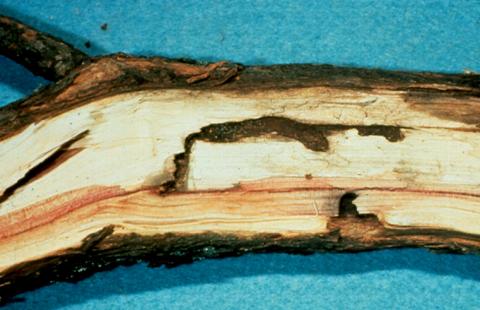
This caterpillar borer keeps its tunnel free of debris by pushing frass (feces and wood debris) out onto the bark surface. The borer exit hole is circular and about 1/4 inch in diameter. On lilac, the exit holes tend to be low on the large basal stems but can be higher on the trunk. On ash, exit holes tend to be at branch crotches. On heavily attacked lilacs and ash, leaves wilt and turn brown as they die. Stem growth dries and dies. On ash, the young tree can be killed by this insect.
Cycle
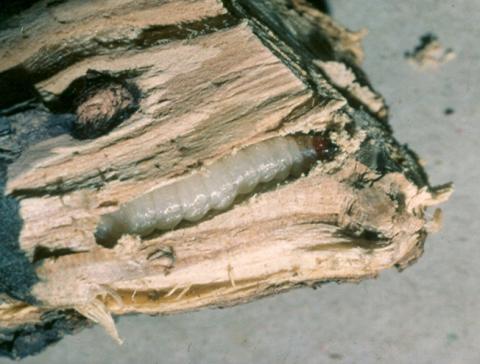
The adult is a clearwing moth that look like a wasp. Eggs are laid on the bark. The larvae eat their way through the bark where they feed on the phloem tissue. Eventually the larvae tunnel deeper and feed on the sapwood. The adult female borer lays almost 400 eggs in less than a week and dies soon after laying the eggs. The eggs are laid near injuries including pruning wounds.
Management
Keep lilac shrubs properly pruned, removing stems over 2 inches in diameter.Avoid pruning lilacs and ash during summer months. Keep lilacs healthy - water and fertilize as needed to maintain plant vigor (however over fertilation can prevent flowering). Use an insecticide if needed when vanhoutte spirea is in full to late bloom. Using a phermone trap can assist in timing inseticide applications. Apply treatment two weeks after peak moth catch.
Credit

James E. Schuster, retired Extension Specialist, Horticulture & Plant Pathology and Dr. Philip L. Nixon, Extension Entomologist, Dept. of Crop Sciences, University of Illinois

PathogenID
92
Images
Image
Lilac borer larvae in lilac
picID
34826
Image
Ash/lilac borer trap - used to determine when to treat.
picID
34828
Image
Borer tunneling
picID
30969
Image
Lilac borer larva
picID
31073
Image
picID
34983
Image
Ash borer in trap
picID
26056