Honeysuckle Aphid

Pathogen Type
Scientific Name
Hyadaphis tataricae
Frequency
2
Severity
4
Hosts
Honeysuckle aphid became a problem in Illinois in the early 80's in the Chicago area. It has since spread throughout Illinois. It feeds on most honeysuckles. However, Lonicera tatarica 'Arnold Red" and small shrub varieties are resistant to the insects feeding and do not show damage.
Symptoms
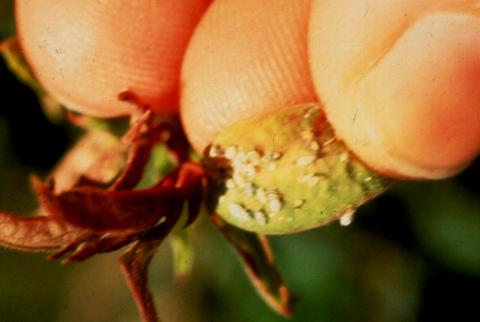
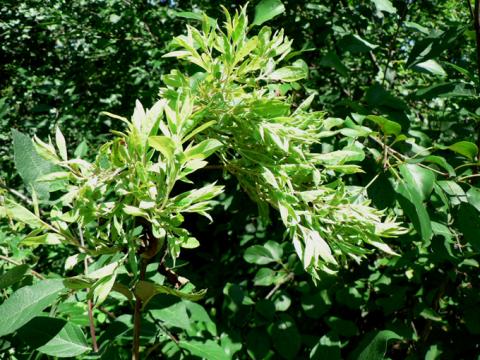
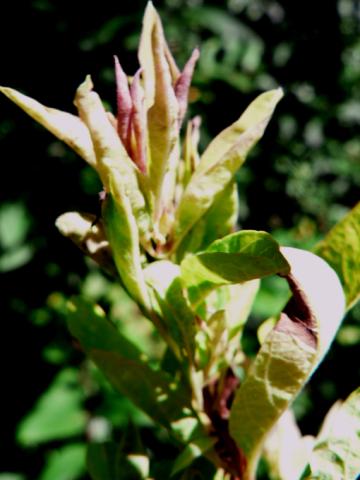
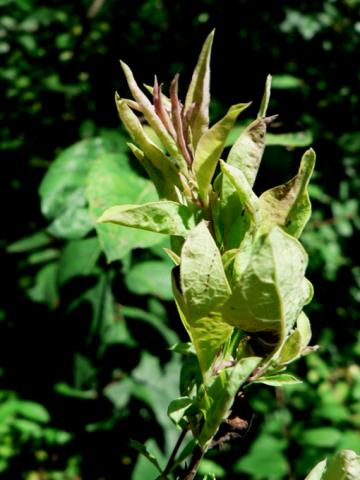
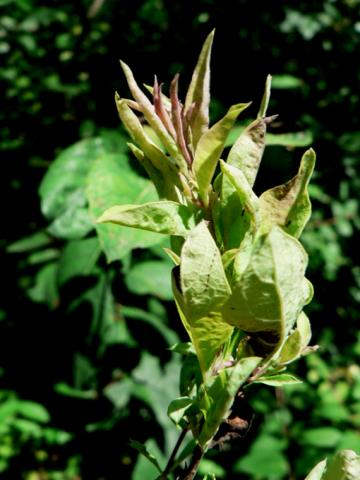
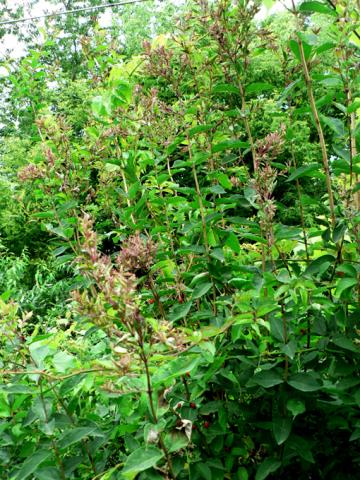
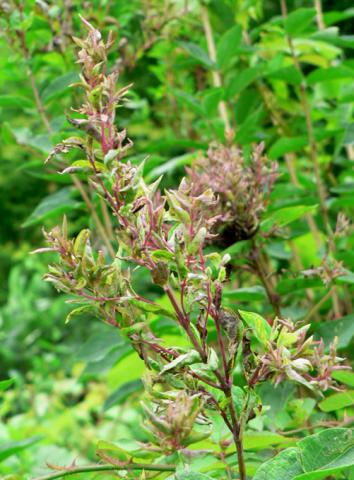
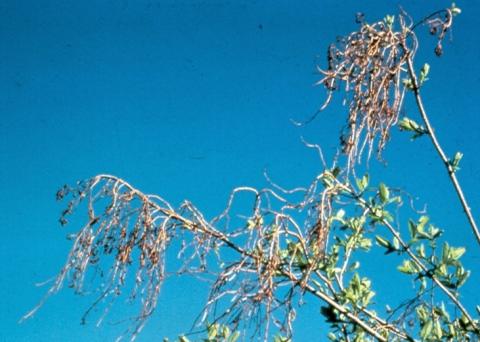
The toxins released during feeding cause growth changes in the honeysuckle. Leaves fold over and protect the aphid from predators. The folded leaves also makes it more difficult to control these insects. In addition there is a shortening of branch tips and growth of dormant buds causing a witches-broom appearance. Eventually the affected tissue dies due to frost injury.
Cycle
About 90% of the aphid eggs are laid on the damaged tissue. As with most other aphids, only live females are born to the adult female till cooling fall temperatures and shortening days causes sexual males and females to be born. The sexual adults mate and the female then lays the over wintering eggs.
Management
Removing the dead witches-broom before budbreak slightly delays severe infestation the following spring. Treat at the first sign of damage Repeat in four weeks. Control the insectonly during new growth to help reduce the risk of insect becoming resistant to insecticide.
Credit

James E. Schuster, retired Extension Specialist, Horticulture & Plant Pathology and Dr. Philip L. Nixon, Extension Entomologist, Dept. of Crop Sciences, University of Illinois Entomologist

PathogenID
94
Images
Image
Honeysuckle aphid damage after frost
picID
30976
Image
Honeysuckle aphids
picID
30977
Image
Spraying honeysuckle aphids
picID
25899
Image
picID
33952
Image
picID
35073
Image
picID
35074
Image
picID
34944
Image
picID
34946
Image
picID
34948
Image
picID
33953
Image
picID
33956
Image
picID
34949
Image
picID
34950
Image
picID
35077
Image
picID
35078
Image
Early honeysuckle aphid damage
picID
32883
Image
Early honeysuckle aphid damage
picID
32884