Cedar-Quince Rust
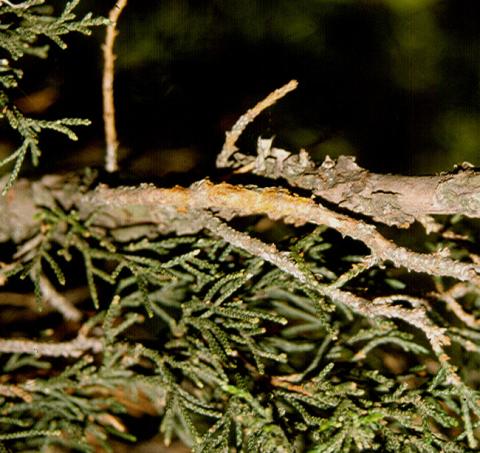
On evergreen hosts, infection occurs on needles and new shoots. In contrast to cedar-apple and cedar-hawthorn rust, this rust causes flaky, perennial branch swellings rather than distinct, roundish galls. Most of these swellings girdle and kill small twigs, but some survive and remain infectious for many years. Most people do not notice the branch swellings until the telia become wet, swell and gelatinize to a bright orange color.
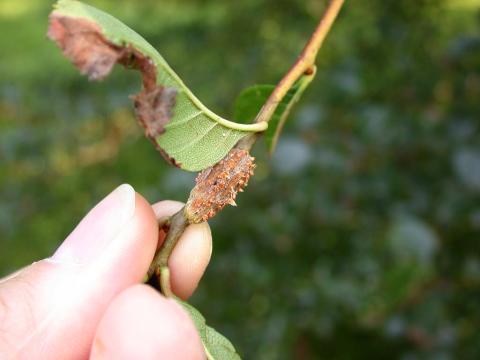
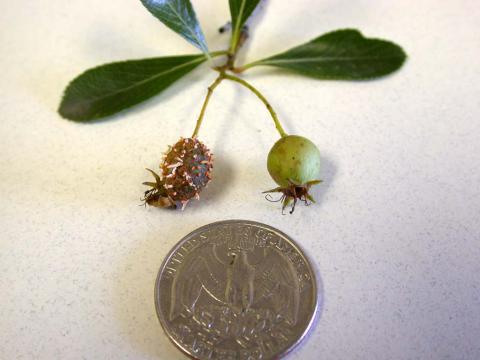
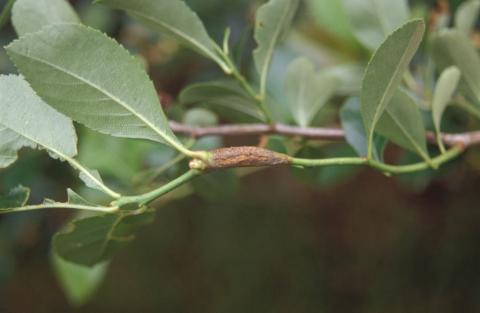
On deciduous hosts, leaves, petioles, young branches and fruit are usually infected and symptoms vary widely among the various hosts. On hawthorn, the pinkish aecia (tubes) occur mainly on branches, thorns, and fruit. Hawthorn and serviceberry fruit often becomes heavily covered with aecia. Branch and thorn infections result in spindle-shaped, perennial cankers that expand each growing season. However, most infected branches are girdled by the canker during the second season, causing die-back to a bud or side-shoot.
James E. Schuster , retired Extension Specialist, Horticulture & Plant Pathology, University of Illinois