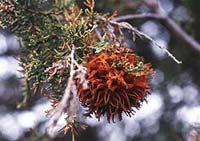
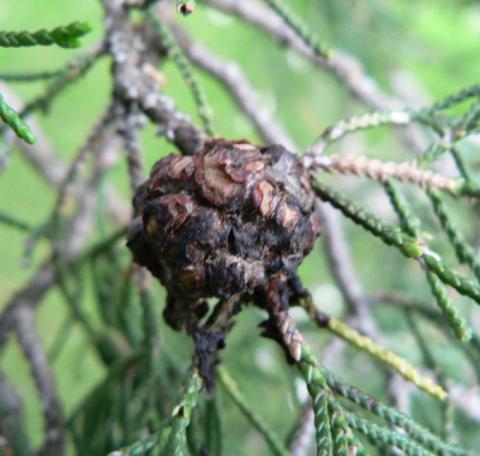
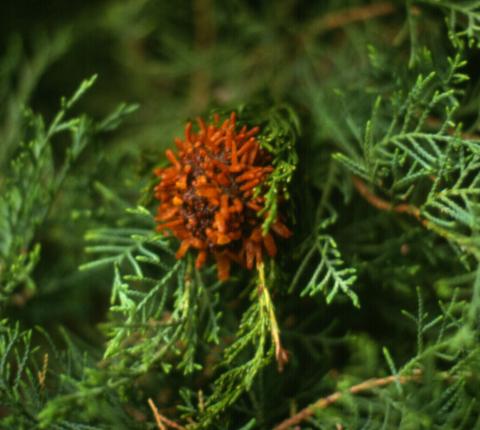
On evergreen hosts, very small (1/8 to 9/16 inches in diameter), roundish galls develop on needles throughout the tree. These galls slowly grow onto the twigs, often becoming flat on the twig side. Immature galls are reddish-brown, while mature galls are grayish-brown in color and scarred. When mature, these galls swell and produce reddish-brown, short, blunt, jelly-like telial horns during rainy spring weather. In contrast to cedar-apple rust galls, cedar-hawthorn rust galls seldom cause the death of infected evergreen twigs.
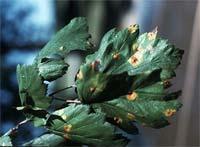
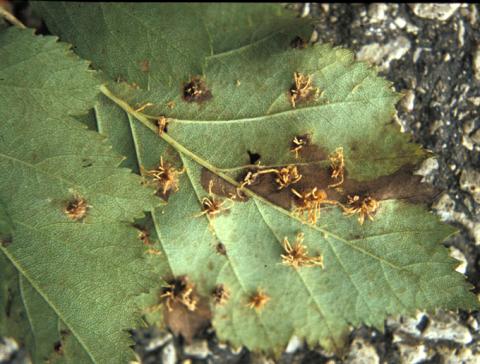
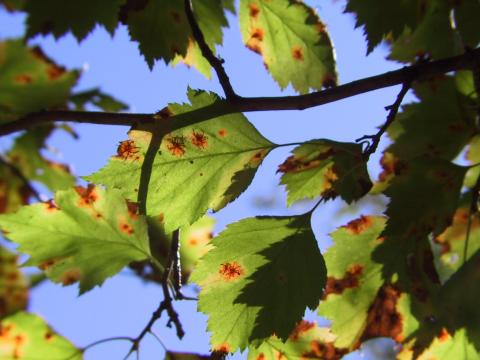
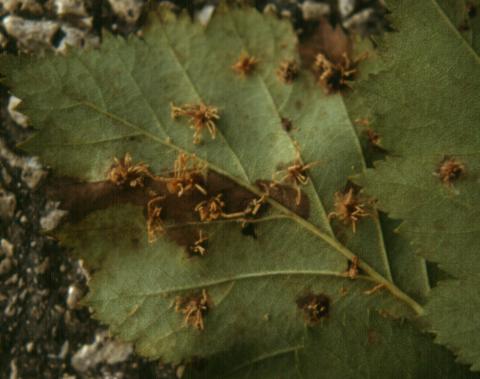
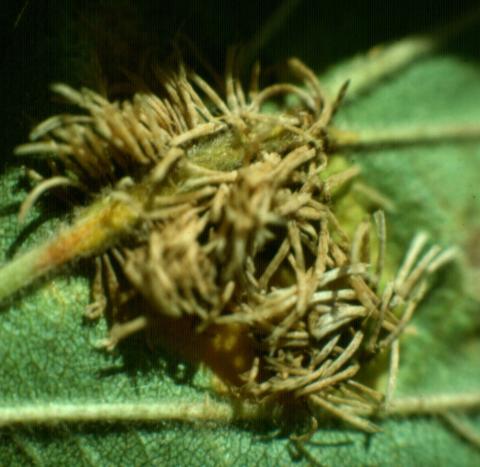
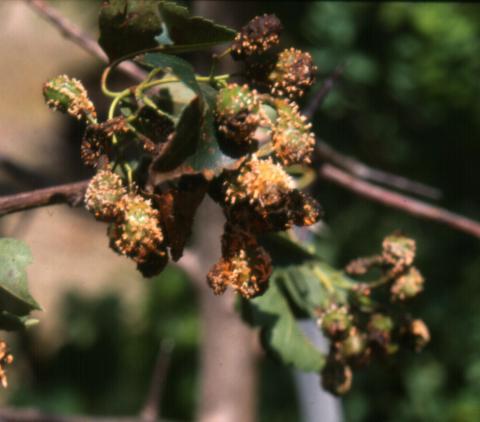
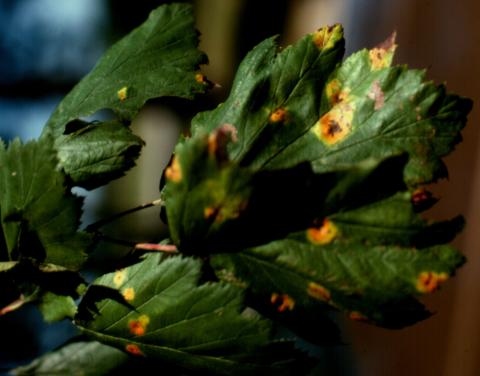
On deciduous hosts, small yellow spots first appear after infection in the spring. As the spots mature and enlarge, they take on an orange color and develop tiny black dots (spermagonia) in the center of the lesion. By mid-summer, tubes (aecia) are visible on the undersides of mature leaf lesions or within the lesions on fruit, petioles, or twigs infections. Hawthorn rust aecia (about 1/8 of an inch long) are longer than the aecia of cedar-apple rust.
With severe rust, hawthorn foliage may turn bright yellow and drop prematurely. In addition, fruit and young shoots may become infected. The symptoms vary when other hosts are infected. On quince, black flat lesions (without aecia) form on fruit. Dark brown to blackish spots with reddish halos form on the upper surface of pear leaves. In addition, aecia may develop on the petioles and lower surface of pear leaves.