Black Vine Weevil

Pathogen Type
Scientific Name
Otiorhynchus sulcatus
Frequency
4
Severity
2
Hosts
Black vine weevils feed on a wide range of plants including yews, winter creeper euonymous, rhododendron/azaleas and herbaceous plants such as strawberries, hostas and lily-of-the-valley. In addition the strawberry weevil may feed on azaleas/rhododendrons causing similar damage.
Symptoms

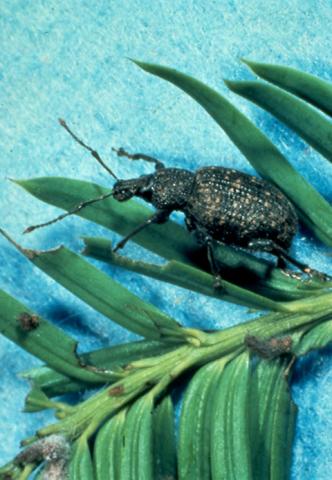
The adult weevil is black with gold flecks scattered on its fused wings.

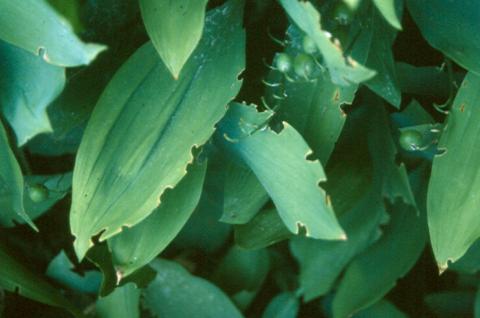
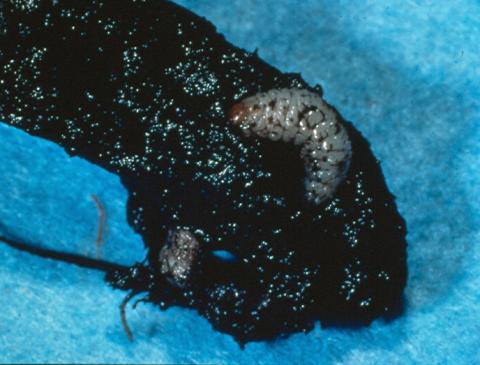
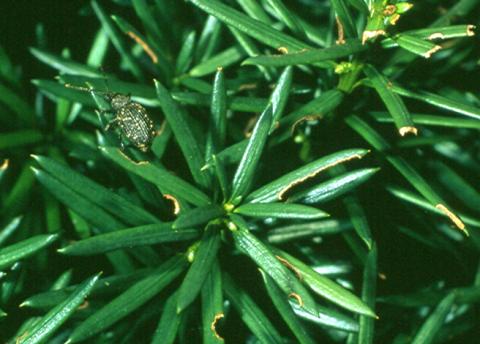
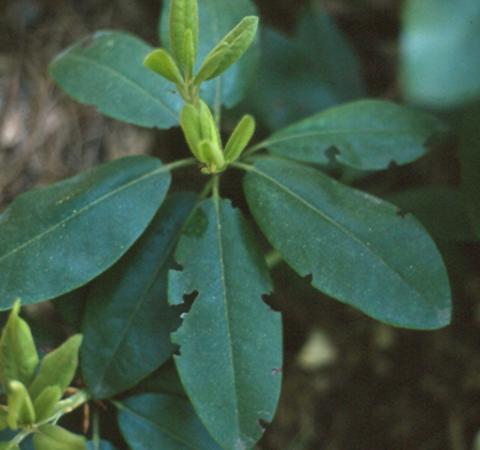
Larvae feed on feeder roots of plants. Large numbers can eat enough roots to cause the plants to decline and even die. However, in most cases the plant is able to grow new feeder roots faster than the black vine weevils eat them. In nurseries, this insect can cause severe dieback and plant death, particularly in containarized stock. The feeding damage appears as notches along the edge of the leaves. (On yews, the black vine weevil adults not only notch the needles, but sometimes eat the tip end of the needle off.)

Cycle
The black vine weevils begin to lay eggs about two weeks after emerging from the soil as adults. The adults, which are all females (there are no males needed for reproduction, emerge in May or June when van houtte spirea finishes bloom. They emerge earlier in the rest of the state. The wings are fused so they cannot fly. They are often moved from one location to another on infested plant material or in the soil around the plant's root system. The adults feed on plant foliage into the fall. Adults feeding on plants close to a building often migrate into building as temperatures drop. Inside the home, the insects are usually just a nuisance; however, occasionally they feed on house plants. The insect hides during the day- usually in plant litter or mulch around the base of the plant. They can lay eggs throughout the summer months. After the eggs hatch the larvae start feeding on feeder roots. The weevil often over-winters as a partially grown larva. Some adults may over-winter if they are in a heated building.
Management
The black vine weevil feeds at night, so insecticides should be applied just before dusk. Insecticidal control relies on eliminating the adults before they lay eggs.
Credit

James E. Schuster, retired Extension Specialist, Horticulture & Plant Pathology and Dr. Philip L. Nixon, Extension Entomologist, Dept. of Crop Sciences, University of Illinois

PathogenID
97
Images
Image
Black vine weevil damage on rhododendron
picID
30936
Image
Black vine weevil damage on lily-of-the-valley
picID
30937
Image
Black vine weevil (bottom) and strawberry weevil (top) can feed on the same plants
picID
34836
Image
Black vine weevils make paper punch size notches in leaf margins. Nocturnal feeders that are only females - no males are ever produced
picID
34841
Image
Black vine weevil on yew
picID
25876
Image
picID
33311
Image
picID
33312
Image
picID
26156
Image
picID
26169
Image
Black vine weevil and damage
picID
31185