Ash Yellows

Pathogen Type
Scientific Name
unnamed phytoplasma
Frequency
2
Severity
4.5
Hosts
Ash species, primarily white ash and green ash in both landscapes and forest stands, are susceptible to ash yellows. Ten other ash species are also reported hosts. White ash sustaines the greatests damage. The same pathogen also causes lilac witches' brooming, a decline disease of several species of lilac, particularly Japanese tree lilac.
Symptoms

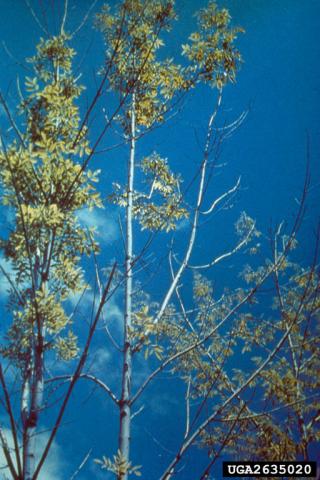
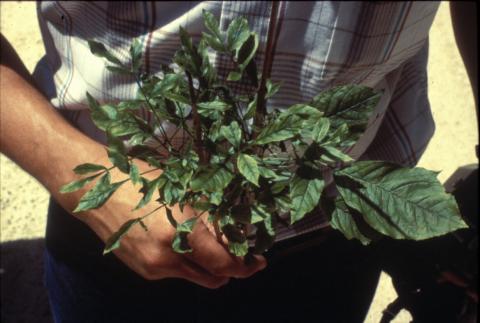
Reduced radial and branch growth, loss of apical dominance in branches (a condition called deliquescent branching), and progressive decline are typical symptoms of ash yellows. Shortened twig growth is common, resulting in tufted foliage. Leaves of infected trees are often smaller than normal and light green in color, and they may develop early fall coloration. Eventually a progressive dieback of branches begins, and witches' brooms may develop. Witches' brooms occur most frequently on trees with severe dieback and on stumps of diseased trees. They commonly develop at the base of trunks but occasionally can be found several feet above ground. Vertical cracks often occur on the lower trunk. Symptom progression is slower and the disease less severe in green ash than in white ash. Although witches' brooms are diagnostic for ash yellows, only a small percentage of infected trees display this symptom. Laboratory confirmation of ash yellows is based on a staining technique using a fluorescence microscope.

Emerald Ash Borer symptoms mimic Ash Yellows so proper identification is important.

Cycle
The ash yellows pathogen (a phytoplasma) is presumed to be spread by phloem-feeding insects such as leafhoppers. Little is known about other hosts for this phytoplasma, but research is ongoing.
Management
There are currently no measures to control this disease. Trees with this disease should be removed. Species diversity in landscapes and forest stands will reduce the overall impact of tree loss due to ash yellows. Cultural practices to reduce tree stress might help to slow the progression of symptoms.
Credit

James E. Schuster, retired Extension Specialist, Horticulture & Plant Pathology, University of Illinois Extension

PathogenID
85
Images
Image
Ash tree showing witches' brooms due to ash yellows infection.
picID
34808
Image
Ash yellows.
picID
34809
Image
Ash tree showing witches' brooms due to ash yellows infection.
picID
34811
Image
Ash showing decline due to ash yellows infection (www.forestryimages.org)
picID
55518
Image
Green ash showing witches' brooms due to ash yellows infection.
picID
55519
Image
White ash tree showing witches' brooms due to ash yellows infection.
picID
55517